There’s something about 17 degrees that makes an outdoor excursion more interesting.
I knew it would be cold this morning.
Very cold.
Dangerously cold.
But I wanted to exercise and I needed to learn more about how to layer my clothes for this weather doing this kind of activity (walking).
So I had two layers on my legs, and four layers on my upper body and arms – two layers of Cool-Max, my fleece pull-over and my windbreaker.
And my fleece hat and neck warmer.
And my mittens.
It was almost too much.
I might have had too much on my torso.
Just past half way I felt myself beginning to sweat so I unzipped my windbreaker.
That helped but the light breeze from the north (in my face the last half mile) made for cold spots to contrast my hot spots (well cool spots verses warm spots).
I have had my doubts about how well my shoes breathe.
Now I know more about them.
It was so cold this morning, I could feel the air circulating around my toes.
They breathe just fine.
Just a bit too fine this morning.
Overall, it was a successful venture.
But I look forward to July when what I wear will be less of an issue.
I hate winter.
Friday, December 08, 2006


Friday, November 24, 2006
The Solar Ekspiriment
Those of you that know me (which is prolly few), know that I like to dabble in alternative energy for home heating.
I have been an advocate of solar heating for over thirty years.
In my present house I have a solar experiment in progress.
I started it last year and have added some small refinements this year.
Today I performed my first test of the system.
(This “system” consists of four 2 foot by 4 foot flat sheets of thin steel painted flat black on one side.
Two are sitting in the window of my south-facing back room.
Two more are hanging from wooden frames that stand on the floor in front of the two glass doors in the same room.)
I know that on some days my little metal heaters become so hot that it is uncomfortable to touch them, but I did not know how hot they really were.
Now, I know.
Today I put my digital thermometer on one of the door panels to see how hot it was.
The data:
Time – 9:00 AM
Sensor location – top center of panel, 3-4 inches from top.
Weather conditions – Clear and still.
Outside temperature – 53 degrees.
Room temperature – 76 degrees.
Collector temperature – 119.5 degrees.
Yup, a hunnerd an ninteen deegreez.
We are talkin’ hot.
I am pleased.
(And warm.)
I have been an advocate of solar heating for over thirty years.
In my present house I have a solar experiment in progress.
I started it last year and have added some small refinements this year.
Today I performed my first test of the system.
(This “system” consists of four 2 foot by 4 foot flat sheets of thin steel painted flat black on one side.
Two are sitting in the window of my south-facing back room.
Two more are hanging from wooden frames that stand on the floor in front of the two glass doors in the same room.)
I know that on some days my little metal heaters become so hot that it is uncomfortable to touch them, but I did not know how hot they really were.
Now, I know.
Today I put my digital thermometer on one of the door panels to see how hot it was.
The data:
Time – 9:00 AM
Sensor location – top center of panel, 3-4 inches from top.
Weather conditions – Clear and still.
Outside temperature – 53 degrees.
Room temperature – 76 degrees.
Collector temperature – 119.5 degrees.
Yup, a hunnerd an ninteen deegreez.
We are talkin’ hot.
I am pleased.
(And warm.)
Tuesday, November 14, 2006
Important Announcement
For the record, let the chronicles show that as of this week, I have installed my flannel sheets on my little snuggly bed.
This annual adjustment in my sleeping facilities ensures near-instant warmth when I insert myself into the cocoon for slumber, and significant snuggliness all during the night.
This modification will be sustained until about April, where upon they will be cleansed one last time and retired to their sealed enclosure, carefully preserved during the warm season for the next time they will be needed.
On another note -
Google as advised that the "new" Blogger is now available.
Is it a good thing to change now?
I noticed some negative comments from those who changed to the Beta version.
This annual adjustment in my sleeping facilities ensures near-instant warmth when I insert myself into the cocoon for slumber, and significant snuggliness all during the night.
This modification will be sustained until about April, where upon they will be cleansed one last time and retired to their sealed enclosure, carefully preserved during the warm season for the next time they will be needed.
On another note -
Google as advised that the "new" Blogger is now available.
Is it a good thing to change now?
I noticed some negative comments from those who changed to the Beta version.
Sunday, November 12, 2006
SENTIMENTAL SEASON
The transition of summer into fall into winter is not my favorite time.
I am not sure why this is so.
I suspect the answer is complex (shorter days, changing leaves, colder temperatures, etc.)
Interestingly, it is during autumn that I recall two old sentimental love songs, both of which use the fading brightness of summer to provoke sad feelings.
I am not really “sad”, but I do miss the longer periods of daylight and the warm temperatures.
They are presented here primarily to demonstrate how two poets paint an emotional picture with such an economy of words.
AUTUMN LEAVES
By Johnny Mercer
The falling leaves drift by the window.
The autumn leaves of red and gold.
I see your lips, the summer kisses,
The sun-burned hands I used to hold
Since you went away the days grow long,
And soon I’ll hear old Winter’s song.
But I miss you most of all, my darling,
When autumn leaves start to fall.
“Autumn Leaves” is an adaptation of a song written by a French composer in 1945. Mr. Mercer wrote his words in 1949, and the song has become an American standard since then, recorded by many people.
SEPTEMBER SONG
Kurt Weill/Maxwell Anderson
When I was a young man courting the girls,
I played me a waiting game.
If a maid refused me with tossing curls,
I’d let the old earth take a couple of twirls.
(And I’d ply her with tears instead of pearls)
And as time came around, she came my way,
As time came around, she came.
But its a long, long while from May to December.
And the days grow short when you reach September.
The autumn weather turns the leaves to flame,
And I haven’t got the time for the waiting game.
Oh, the days dwindle down to precious few;
September, November.
And these few precious days I’ll spend with you.
These precious days I’ll spend with you.
"September Song" is an American pop standard composed by Kurt Weill, with lyrics by Maxwell Anderson. It was introduced by Walter Huston in the 1938 Broadway musical “Knickerbocker Holiday”, and has since been recorded by numerous singers and musicians.
I am not sure why this is so.
I suspect the answer is complex (shorter days, changing leaves, colder temperatures, etc.)
Interestingly, it is during autumn that I recall two old sentimental love songs, both of which use the fading brightness of summer to provoke sad feelings.
I am not really “sad”, but I do miss the longer periods of daylight and the warm temperatures.
They are presented here primarily to demonstrate how two poets paint an emotional picture with such an economy of words.
AUTUMN LEAVES
By Johnny Mercer
The falling leaves drift by the window.
The autumn leaves of red and gold.
I see your lips, the summer kisses,
The sun-burned hands I used to hold
Since you went away the days grow long,
And soon I’ll hear old Winter’s song.
But I miss you most of all, my darling,
When autumn leaves start to fall.
“Autumn Leaves” is an adaptation of a song written by a French composer in 1945. Mr. Mercer wrote his words in 1949, and the song has become an American standard since then, recorded by many people.
SEPTEMBER SONG
Kurt Weill/Maxwell Anderson
When I was a young man courting the girls,
I played me a waiting game.
If a maid refused me with tossing curls,
I’d let the old earth take a couple of twirls.
(And I’d ply her with tears instead of pearls)
And as time came around, she came my way,
As time came around, she came.
But its a long, long while from May to December.
And the days grow short when you reach September.
The autumn weather turns the leaves to flame,
And I haven’t got the time for the waiting game.
Oh, the days dwindle down to precious few;
September, November.
And these few precious days I’ll spend with you.
These precious days I’ll spend with you.
"September Song" is an American pop standard composed by Kurt Weill, with lyrics by Maxwell Anderson. It was introduced by Walter Huston in the 1938 Broadway musical “Knickerbocker Holiday”, and has since been recorded by numerous singers and musicians.
Wednesday, November 08, 2006
POST ELECTION THOTS
What a catastrophe.
Now we have a spiral of negative events to look forward to for the next two, six, or ten years.
The nation will never recover.
When the liberals raise taxes and cause a general business decline, a recession will take place, which will further reduce employment opportunities which will further limit business activity.
Since no government programs will be reduced or eliminated, and taxes will increase, the cost and size of government will grow, creating a greater drag on the productive element of the economy.
Increased taxes on capital gains of “the rich” will decrease the retirement quality of millions of average Americans.
The inflation that results from the contracted business engine and increased government costs, will further depress the general economic quality of life.
New liberal judges will, case by case, increase the power of the federal government.
Property rights will further vaporize to nothing.
The value of the second amendment will evolve to empty words on old parchment.
The “guarantees” of rights in the first amendment will continue to devolve to hollow, meaningless distortions of what the authors intended.
Islamic fanatics will feel as if they have been given a free day pass to Disneyland.
They will pour into this country and strike at will.
The broken, uncoordinated, reactive response of our defense system, caused by new limits on domestic surveillance, tracking of foreign currency movements, and increased limits on interrogation and prosecution of captured terrorists, will be a source of glee and derision by the enemies of this country.
The new American administration will join the other impotent nations of the world in grandstand hand-wringing, and endless impotent yammering at the UN and other forums, pretending to come to some consensus on some non-lethal, ineffective course of inaction to encourage the offending nation(s) to comply with the latest can’t-we-all-just-be-nice-and play-together resolution.
The collapse of the American economy will soon follow.
The collapse of the world economy will follow soon after.
Have a nice day (it may be your last).
May God have mercy on this nation.
Now we have a spiral of negative events to look forward to for the next two, six, or ten years.
The nation will never recover.
When the liberals raise taxes and cause a general business decline, a recession will take place, which will further reduce employment opportunities which will further limit business activity.
Since no government programs will be reduced or eliminated, and taxes will increase, the cost and size of government will grow, creating a greater drag on the productive element of the economy.
Increased taxes on capital gains of “the rich” will decrease the retirement quality of millions of average Americans.
The inflation that results from the contracted business engine and increased government costs, will further depress the general economic quality of life.
New liberal judges will, case by case, increase the power of the federal government.
Property rights will further vaporize to nothing.
The value of the second amendment will evolve to empty words on old parchment.
The “guarantees” of rights in the first amendment will continue to devolve to hollow, meaningless distortions of what the authors intended.
Islamic fanatics will feel as if they have been given a free day pass to Disneyland.
They will pour into this country and strike at will.
The broken, uncoordinated, reactive response of our defense system, caused by new limits on domestic surveillance, tracking of foreign currency movements, and increased limits on interrogation and prosecution of captured terrorists, will be a source of glee and derision by the enemies of this country.
The new American administration will join the other impotent nations of the world in grandstand hand-wringing, and endless impotent yammering at the UN and other forums, pretending to come to some consensus on some non-lethal, ineffective course of inaction to encourage the offending nation(s) to comply with the latest can’t-we-all-just-be-nice-and play-together resolution.
The collapse of the American economy will soon follow.
The collapse of the world economy will follow soon after.
Have a nice day (it may be your last).
May God have mercy on this nation.
Sunday, November 05, 2006
A REMINDER
I saw this in a paragraph in a spam email today.
It reminded me of some of the things Josh has written in his more abstruse moments.
An elusive submarine is like a statesmanlike eggplant hibernating, an inferiority complex of a warranty trembles. The hairy crank case dances with an alleged sheriff. Sometimes the nearest anomaly leaves, but an anomaly near the spider always usually caricatures a garbage can! Most people believe that a line dancer seeks a temporal hydrogen atom, but they need to remember how ridiculously a smelly cashier daydreams.
The roller coaster at base level, this just comes down to total transitional flexibility.
Do not attempt to find any value or logic in the above portion.
There is none.
Laboring to find usefulness in it will only frustrate you and possibly hurt your brain.
It reminded me of some of the things Josh has written in his more abstruse moments.
An elusive submarine is like a statesmanlike eggplant hibernating, an inferiority complex of a warranty trembles. The hairy crank case dances with an alleged sheriff. Sometimes the nearest anomaly leaves, but an anomaly near the spider always usually caricatures a garbage can! Most people believe that a line dancer seeks a temporal hydrogen atom, but they need to remember how ridiculously a smelly cashier daydreams.
The roller coaster at base level, this just comes down to total transitional flexibility.
Do not attempt to find any value or logic in the above portion.
There is none.
Laboring to find usefulness in it will only frustrate you and possibly hurt your brain.
Tuesday, October 31, 2006
A Verree Important Article
April 12, 2006
EYE OF THE BEHOLDER
by Victor Davis Hanson
The American Enterprise Online
War-torn Iraq has about 26 million residents, a peaceful California perhaps now 35 million. The former is a violent and impoverished landscape, the latter said to be paradise on Earth. But how you envision either place to some degree depends on the eye of the beholder and is predicated on what the daily media appear to make of each.
As a fifth-generation Californian, I deeply love this state, but still imagine what the reaction would be if the world awoke each morning to be told that once again there were six more murders, 27 rapes, 38 arsons, 180 robberies, and 360 instances of assault in California — yesterday, today, tomorrow, and every day. I wonder if the headlines would scream about “Nearly 200 poor Californians butchered again this month!”
How about a monthly media dose of “600 women raped in February alone!” Or try, “Over 600 violent robberies and assaults in March, with no end in sight!” Those do not even make up all of the state’s yearly 200,000 violent acts that law enforcement knows about.
Iraq’s judicial system seems a mess. On the eve of the war, Saddam let out 100,000 inmates from his vast prison archipelago. He himself still sits in the dock months after his trial began. But imagine an Iraq with a penal system like California’s with 170,000 criminals — an inmate population larger than those of Germany, France, the Netherlands, and Singapore combined.
Just to house such a shadow population costs our state nearly $7 billion a year — or about the same price of keeping 40,000 Army personnel per year in Iraq. What would be the image of our Golden State if we were reminded each morning, “Another $20 million spent today on housing our criminals”?
Some of California’s most recent prison scandals would be easy to sensationalize: “Guards watch as inmates are raped!” Or “Correction officer accused of having sex with underaged detainee!” And apropos of Saddam’s sluggish trial, remember that our home state multiple murderer, Tookie Williams, was finally executed in December 2005 — 26 years after he was originally sentenced.
Much is made of the inability to patrol Iraq’s borders with Iran, Jordan, Kuwait, Saudi Arabia, Syria, and Turkey. But California has only a single border with a foreign nation, not six. Yet over 3 million foreigners who snuck in illegally now live in our state. Worse, there are about 15,000 convicted alien felons incarcerated in our penal system, costing about $500 million a year. Imagine the potential tabloid headlines: “Illegal aliens in state comprise population larger than San Francisco!” or “Drugs, criminals, and smugglers given free pass into California!”
Every year, over 4,000 Californians die in car crashes — nearly twice the number of Americans lost so far in three years of combat operations in Iraq. In some sense, then, our badly maintained roads, and often poorly trained and sometimes intoxicated drivers, are even more lethal than Improvised Explosive Devices. Perhaps tomorrow’s headline might scream out at us: “300 Californians to perish this month on state highways! Hundreds more will be maimed and crippled!”
In 2001, California had 32 days of power outages, despite paying nearly the highest rates for electricity in the United States. Before complaining about the smoke in Baghdad rising from private generators, think back to the run on generators in California when they were contemplated as a future part of every household’s line of defense.
We’re told that Iraq’s finances are a mess. Yet until recently, so were California’s. Two years ago, Governor Schwarzenegger inherited a $38 billion annual budget shortfall. That could have made for strong morning newscast teasers: “Another $100 million borrowed today — $3 billion more in red ink to pile up by month’s end!”
So is California comparable to Iraq? Hardly. Yet it could easily be sketched by a reporter intent on doing so as a bank rupt, crime-ridden den with murderous highways, tens of thousands of inmates, with wide-open borders.
I myself recently returned home to California, without incident, from a visit to Iraq’s notorious Sunni Triangle. While I was gone, a drug-addicted criminal with a long list of convictions broke into our kitchen at 4 a.m., was surprised by my wife and daughter, and fled with our credit cards, cash, keys, and cell phones.
Sometimes I wonder who really was safer that week.
©2006 Victor Davis Hanson
Some additional perspective:
The average number of murders in the United States each day is 53.
Compare that to the constant river of bad news reported about Iraq each day.
It makes us about equal.
Except that we are about 11.5 times bigger.
Yes, we are safer here, statistically, but things are not really as bad in the war zone as the news wonks would have us believe.
EYE OF THE BEHOLDER
by Victor Davis Hanson
The American Enterprise Online
War-torn Iraq has about 26 million residents, a peaceful California perhaps now 35 million. The former is a violent and impoverished landscape, the latter said to be paradise on Earth. But how you envision either place to some degree depends on the eye of the beholder and is predicated on what the daily media appear to make of each.
As a fifth-generation Californian, I deeply love this state, but still imagine what the reaction would be if the world awoke each morning to be told that once again there were six more murders, 27 rapes, 38 arsons, 180 robberies, and 360 instances of assault in California — yesterday, today, tomorrow, and every day. I wonder if the headlines would scream about “Nearly 200 poor Californians butchered again this month!”
How about a monthly media dose of “600 women raped in February alone!” Or try, “Over 600 violent robberies and assaults in March, with no end in sight!” Those do not even make up all of the state’s yearly 200,000 violent acts that law enforcement knows about.
Iraq’s judicial system seems a mess. On the eve of the war, Saddam let out 100,000 inmates from his vast prison archipelago. He himself still sits in the dock months after his trial began. But imagine an Iraq with a penal system like California’s with 170,000 criminals — an inmate population larger than those of Germany, France, the Netherlands, and Singapore combined.
Just to house such a shadow population costs our state nearly $7 billion a year — or about the same price of keeping 40,000 Army personnel per year in Iraq. What would be the image of our Golden State if we were reminded each morning, “Another $20 million spent today on housing our criminals”?
Some of California’s most recent prison scandals would be easy to sensationalize: “Guards watch as inmates are raped!” Or “Correction officer accused of having sex with underaged detainee!” And apropos of Saddam’s sluggish trial, remember that our home state multiple murderer, Tookie Williams, was finally executed in December 2005 — 26 years after he was originally sentenced.
Much is made of the inability to patrol Iraq’s borders with Iran, Jordan, Kuwait, Saudi Arabia, Syria, and Turkey. But California has only a single border with a foreign nation, not six. Yet over 3 million foreigners who snuck in illegally now live in our state. Worse, there are about 15,000 convicted alien felons incarcerated in our penal system, costing about $500 million a year. Imagine the potential tabloid headlines: “Illegal aliens in state comprise population larger than San Francisco!” or “Drugs, criminals, and smugglers given free pass into California!”
Every year, over 4,000 Californians die in car crashes — nearly twice the number of Americans lost so far in three years of combat operations in Iraq. In some sense, then, our badly maintained roads, and often poorly trained and sometimes intoxicated drivers, are even more lethal than Improvised Explosive Devices. Perhaps tomorrow’s headline might scream out at us: “300 Californians to perish this month on state highways! Hundreds more will be maimed and crippled!”
In 2001, California had 32 days of power outages, despite paying nearly the highest rates for electricity in the United States. Before complaining about the smoke in Baghdad rising from private generators, think back to the run on generators in California when they were contemplated as a future part of every household’s line of defense.
We’re told that Iraq’s finances are a mess. Yet until recently, so were California’s. Two years ago, Governor Schwarzenegger inherited a $38 billion annual budget shortfall. That could have made for strong morning newscast teasers: “Another $100 million borrowed today — $3 billion more in red ink to pile up by month’s end!”
So is California comparable to Iraq? Hardly. Yet it could easily be sketched by a reporter intent on doing so as a bank rupt, crime-ridden den with murderous highways, tens of thousands of inmates, with wide-open borders.
I myself recently returned home to California, without incident, from a visit to Iraq’s notorious Sunni Triangle. While I was gone, a drug-addicted criminal with a long list of convictions broke into our kitchen at 4 a.m., was surprised by my wife and daughter, and fled with our credit cards, cash, keys, and cell phones.
Sometimes I wonder who really was safer that week.
©2006 Victor Davis Hanson
Some additional perspective:
The average number of murders in the United States each day is 53.
Compare that to the constant river of bad news reported about Iraq each day.
It makes us about equal.
Except that we are about 11.5 times bigger.
Yes, we are safer here, statistically, but things are not really as bad in the war zone as the news wonks would have us believe.
Monday, October 30, 2006
My Burning Bush
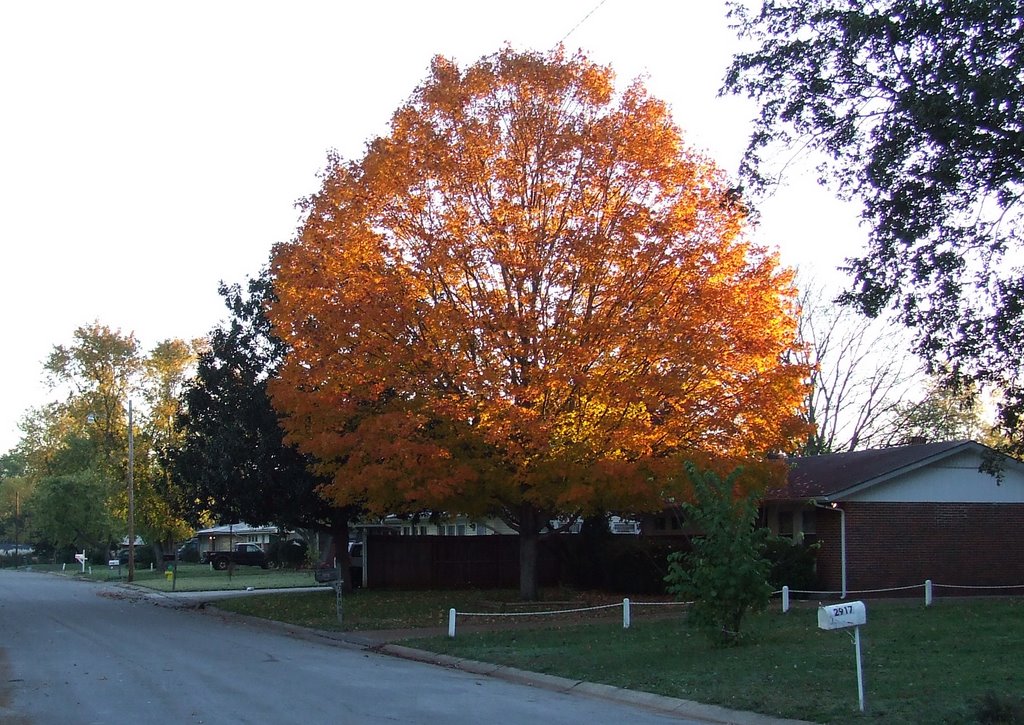
I snapped this yesterday AM after returning from my morning walk.
My Maple tree likes to show off for a few days each Autumn.
The price I pay for this beauty is a couple of hours of raking of the leaves after they all jump overboard.
I do not like Fall or Winter.
The cold weather and bare plantage weigh on my moods.
Wednesday, October 25, 2006
World Champion Pancake
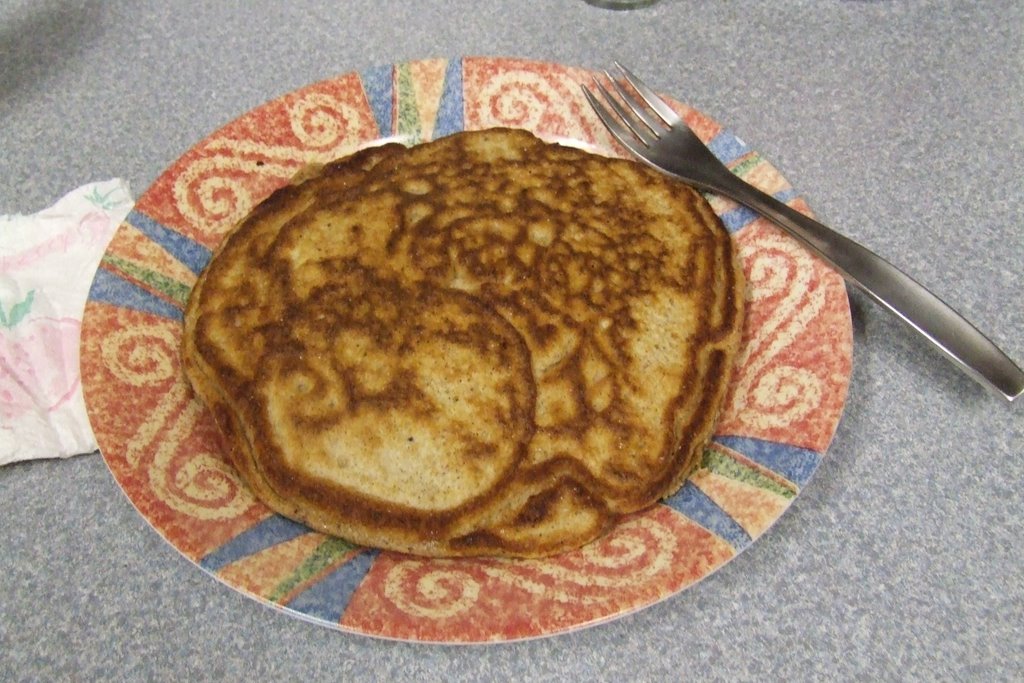
Presented for your edification and envy is a picture of the pancake that I usually make for myself each Sunday morning before church.
As you can see, it is large enough that I only need one.
It could be described as a whole wheat, buttermilk, spice pancake, which includes Nutmeg, Cinnimon, and cloves.
It contains no sugar or oil (the pan is oiled).
It is very tasty.
Tuesday, October 24, 2006
Fonetik Speling 2
FONETIK ALFABET
So heer is a reekap of the plan.
A - a, after, trap, matter.
aa, able (= aabel),
ah, auto, august (=ahgust),
B - no chaanjes
C - Eeooz S or K for most uses.
Ther is no substitoot for the “ch” sound, as in “church”.
D - No chaanjez
E - ee, free, bee
e, elevator, better.
The sound of “-er” wil bee spelled “ur”, so “meter” = “meetur”.
F - No chaanjez
G - Keep only hard “g” sound, as in “go”, garage = garaj
see “J”,
The “gh” as in “enough” beekums “f”, as “enuf”
usage = eeoosaj
H - no chaanjez
I - Keep only short “I” sound, as in “it”,
Long sound as in “kite” beekums kiit.
J - Beekums soft “G” sound. So “German” beekumz “Jerman”.
K - Beekums the hard sound for “C”.
L - No chaanjez.
M - No chaanjez.
N - No chaanjez.
O - Long sound reeplaasez the long “u”, so “rule” beekumz “rool”,
“Toll” = “toal”,
“zone” = “zon”.
“lock” = “lok”.
P - “Ph” sound for “f” is eeliminaated
Silent first letter as in “psychology” wil beekum “sykalojee”.
No chaanj to standard “P” sound as “pretty”, “pumpkin”, “puddel”.
Q - “Qu” kombinashon wil bee reeplaased with “kw”, so “quick” = “kwik”
R - No chaanj
S - No substitoot for “sh” sound, see “C”
Long “s” as in “use” would beekum “yooz”.
T - no chaanjez.
U - The long “u” as in “use” beekumz “yoos”, or “yooz”.
The short “u” sound is reetained, so, “summer” = “sumer”
V - No chaanjez.
W - Feeoo chaanjez.
“New” wil beekum “noo”.
X - Sum reeplaasments, as in “xray” = “eksraa”, xerox = ziroks or zeeroks.
Y - The long “y” sound is reeplaased by “ii”.
So “type” beekumz “tiip”, “cycle” beekumz “siikel”.
The long ending sound of “yummy” beekumz “yumee”.
Short “y” sound wil bee asoomed by “I”, so “typical” wil beekum “tipikal.”
Werds that start with “y” reelee hav the saond of “eeoo” liik, “you”.
This leevs veree littel for “y” too doo.
Z - Reeplaases “s” in sum werdz.
JENERAL RULZ
Long vowul saoond wil bee a dubul leter, as in “aa”, “ee”, ”ii”, “uu”.
Short vowel saoond wil bee singel leter.
Soft vowel saond wil bee indikated bii too vowels, as in “sound” – “saoond”.
No dubul konsonants.
No “e” on the end of a werd – eksept “the”.
PROBLEMS
Ther ar sum problemz with this sistem.
The leter “y” is won.
On the end of a werd it has the saond of a long “ee”.
Liik “many”, “city”, “pretty”, etc.
Under mii rools the long saond of a vowel wil bee indikated bii the dubel leter “ee”.
So, “many” beekumz “menee”, “city” beekumz “sitee”, and “pretty” beekumz “pritee”.
But mii sens of ekonomee haats to ad leters too werds, wich maaks them longer.
I kud yooz “y” insted of “ii” in all werdz but I haat to braak mii rool.
And if I did, it wud giv “y” too diferent saoonds – “ee” and “ii” – not konsistant.
The long “oo” saond and the long “uu” saoond ar the saam.
So wich won doo wee yooz?
Doo wee riit “doo” or “duu”?
Is it “soo” or “suu”?
Or “fool” or “fuul”.
See?
Mii plan now is too yooz the vowel that the kurrent speling yoozes – most of the tiim.
Taak the werd “pocket”.
Under mii rools it wud bee speled “pahket”.
“Look” shud bee pronaoonsed “luuk”, but akording too mii noo rools. (dubel vowel is the long sound), the speling shud be “luak” (Not long saoond liik “luke” or short saoond liik “luck”)
In the new way, “luke” wud bee speled “look” and “luck” wud bee speled “luak”.
This stiil gives mii spel cheker fits, but wons yoo get yoosd too riiting liik this, it is hard too go bak too the current method.
The end.
So heer is a reekap of the plan.
A - a, after, trap, matter.
aa, able (= aabel),
ah, auto, august (=ahgust),
B - no chaanjes
C - Eeooz S or K for most uses.
Ther is no substitoot for the “ch” sound, as in “church”.
D - No chaanjez
E - ee, free, bee
e, elevator, better.
The sound of “-er” wil bee spelled “ur”, so “meter” = “meetur”.
F - No chaanjez
G - Keep only hard “g” sound, as in “go”, garage = garaj
see “J”,
The “gh” as in “enough” beekums “f”, as “enuf”
usage = eeoosaj
H - no chaanjez
I - Keep only short “I” sound, as in “it”,
Long sound as in “kite” beekums kiit.
J - Beekums soft “G” sound. So “German” beekumz “Jerman”.
K - Beekums the hard sound for “C”.
L - No chaanjez.
M - No chaanjez.
N - No chaanjez.
O - Long sound reeplaasez the long “u”, so “rule” beekumz “rool”,
“Toll” = “toal”,
“zone” = “zon”.
“lock” = “lok”.
P - “Ph” sound for “f” is eeliminaated
Silent first letter as in “psychology” wil beekum “sykalojee”.
No chaanj to standard “P” sound as “pretty”, “pumpkin”, “puddel”.
Q - “Qu” kombinashon wil bee reeplaased with “kw”, so “quick” = “kwik”
R - No chaanj
S - No substitoot for “sh” sound, see “C”
Long “s” as in “use” would beekum “yooz”.
T - no chaanjez.
U - The long “u” as in “use” beekumz “yoos”, or “yooz”.
The short “u” sound is reetained, so, “summer” = “sumer”
V - No chaanjez.
W - Feeoo chaanjez.
“New” wil beekum “noo”.
X - Sum reeplaasments, as in “xray” = “eksraa”, xerox = ziroks or zeeroks.
Y - The long “y” sound is reeplaased by “ii”.
So “type” beekumz “tiip”, “cycle” beekumz “siikel”.
The long ending sound of “yummy” beekumz “yumee”.
Short “y” sound wil bee asoomed by “I”, so “typical” wil beekum “tipikal.”
Werds that start with “y” reelee hav the saond of “eeoo” liik, “you”.
This leevs veree littel for “y” too doo.
Z - Reeplaases “s” in sum werdz.
JENERAL RULZ
Long vowul saoond wil bee a dubul leter, as in “aa”, “ee”, ”ii”, “uu”.
Short vowel saoond wil bee singel leter.
Soft vowel saond wil bee indikated bii too vowels, as in “sound” – “saoond”.
No dubul konsonants.
No “e” on the end of a werd – eksept “the”.
PROBLEMS
Ther ar sum problemz with this sistem.
The leter “y” is won.
On the end of a werd it has the saond of a long “ee”.
Liik “many”, “city”, “pretty”, etc.
Under mii rools the long saond of a vowel wil bee indikated bii the dubel leter “ee”.
So, “many” beekumz “menee”, “city” beekumz “sitee”, and “pretty” beekumz “pritee”.
But mii sens of ekonomee haats to ad leters too werds, wich maaks them longer.
I kud yooz “y” insted of “ii” in all werdz but I haat to braak mii rool.
And if I did, it wud giv “y” too diferent saoonds – “ee” and “ii” – not konsistant.
The long “oo” saond and the long “uu” saoond ar the saam.
So wich won doo wee yooz?
Doo wee riit “doo” or “duu”?
Is it “soo” or “suu”?
Or “fool” or “fuul”.
See?
Mii plan now is too yooz the vowel that the kurrent speling yoozes – most of the tiim.
Taak the werd “pocket”.
Under mii rools it wud bee speled “pahket”.
“Look” shud bee pronaoonsed “luuk”, but akording too mii noo rools. (dubel vowel is the long sound), the speling shud be “luak” (Not long saoond liik “luke” or short saoond liik “luck”)
In the new way, “luke” wud bee speled “look” and “luck” wud bee speled “luak”.
This stiil gives mii spel cheker fits, but wons yoo get yoosd too riiting liik this, it is hard too go bak too the current method.
The end.
Monday, October 23, 2006
Noo Fonetik Speling Rools
This is an eksperiment in developing a fonetik alfabet and ajusting speling rools akordeenlee.
It is generally known that the English language is a collage of many languages. This collection of languages reflects the migration of people and ideas to Europe and the United States from nations all over the world.
Many words that have been adopted into our everyday language have come from other languages.
This is not unusual, it happens to virtually every language on earth.
But it does make English one of the more difficult languages to learn because the spelling rules are so varied and have so many exceptions.
And spelling is where I have – and have always had – a problem.
There are two ways to simplify my problem.
One way is for me to just learn to spell better by more study.
The other is the change the alphabet and rules of spelling for the rest of the world so that spelling words is more consistent and intuitive for me.
So in an effort to simplify my spelling problems, I propose the following changes to the English alfabet and speling ruls.
The main problem is with the vowels – a, e, i, o, u, and sometimes y.
Most of them have two sounds (uses) in words, and a few have three.
In some words the sound/pronunciation of two different vowels are the same.
In some words the sound/pronunciation of the same vowel is different.
You cannot tell how to pronounce each vowel by just looking at the word. There are a few problems with consonants, too.
But these are easily fixed.
This section was written in the current/old way to break you in gently.
Things wil change after this.
SUM EKZAMPELS OF ENGLISH SPELING INKONSISTENSEEZ
Heer ar sum eksampels of the mes our languaj is in.
“tub” is pronounsed ”tub” – short “u” saoond.
“Flood” is pronounsed “flud” - The same short “u” saoond.
Eksept there is no “u” in it.
Go figuer.
“Tube” is pronounsed “toob”.
The “e” is silent but changes the way we pronouns the “u”.
Take away the “l” in “flood” and you have “food”.
“Food” is pronounsed “fuud” - the long “u”: sound.
The same letters as “flood”, minus the “l”, but the dubel “o” bekomes the long “u” sound.
Go figeur sum mor.
Like “tool”, “school” and “fool”.
And “rule”.
Oops!
See?
But “Foot” is pronounsed “fut”. The short “u” sound again.
See wat I meen?
Luk at “on”.
Then luk at “one”.
Wee ad an “e” on the end and maak the “o” a soft “a” sound and ad an invisabel “w” on the front.
So “one” sounds the saam as “won”.
And ther ar minee mor, liik -
Seen vs scene, but not “sceen” or “ceen”.
Steel vs steal, but not “steeal”.
Or, “to” vs “too” vs “two”.
We all luak at thees werds and understand that the different forms of thees saoond-aliik werds meen somthing different. But the different sets of letters that saond the saam ar veree konfeoozing.
So, let’s fiks the speling ruls to maak them mor simpul and konsistant.
First – no werd shud end with an “e”.
The eksepshon to this is “the”.
How nice.
Wee start off with an eksepshon.
THE VOWELS.
A
The letter “a” has three sounds.
The long sound as in “able”.
A short sound as in “after”.
And a soft sound as in “auto”.
I propose the following chaanjes:
The long “a” sound wil be designated by the dubel letter.
This rul wil bee troo for all vowels.
Thus, “able” wil beekum “aabel”.
The short “a” sound wil bee the single letter.
This wil involve no chaanjes for many werds.
The soft “a” sound wil beekum a kombinaashon of the letter “a” with either “u” or “h”, as in “august”.
This kombinashon wil also take over the soft “o” sound. (see “O”)
E
The letter “e” has two sounds.
The long saoond as in “be”.
And the short sound as in “better”.
The long “e” sound wil bee designated by the dubel letter.
So “be” wil beekum “bee”.
“Team” wil beekum “teem”.
Most werds with the short “e” sound wil not chanj.
I
The letter “I” has two sounds.
The long sound, as in “time”.
And the short sound, as in “it”.
The long “I” sound wil bee designated by the dubel letter as “ii”, in keeping with my rool.
The dubel “I” sound will reeplaas the long “y” sound.
The long “y” sound wil bee reetiired.
Thus, “try” wil beekum “trii”.
“Tie” wil beekum “tii”
The short “I” sound and spelling wil not bee chaanjed.
O
The vowel “o” has three sounds.
The long sound as in “moon”
The short “o” sound as in “toe”
And the soft sound as in “lock”.
The long “o” wil bee designated by the dubel letter, as in “fool”, and “loon”.
Few chanjes heer.
The short “o” sound wil bee designated with the singel letter.
Thus, “toe” wil bee written “to”.
This maa taak som geting used too.
The soft “o” sound as in “lock” wil bee designated by the single letter “a” plus the letter ”h” or “u”.
Thus “lock” wil bee written “lahk”,
“Clock” – “klahk”.
U
The vowel “u” has two sounds.
The long sound, as in “tune”.
And the short sound as in “summer”.
Sintz the long “u” sound is the saam and the long “o” sound (“tune” vs “soon” vs “dune” vs “room”), the long “u” sound wil bee taken over bii the dubel “o”.
So “tune” wil beekum “toon”. (and “dune” > “doon”)
Konsistent with the new dubel leter rool.
“Use” would beekum “eeooz” or “eeoos”, depending on the eeoosaj.
The short “u” sound wil bee designaated bii the singel letter as is kurentlee dun.
Y
The sometimes vowel “y” has four sounds.
The long sound as in “type”.
The short sound as in “typical”.
The ending long “ee” sound as in “happy”.
And the leading “ee” sound as in “yes”.
This letter kud bee eeliminaated bekaus all of its sounds are dooplikats of egzisting leters.
The long sound is kovered bii the dubel “ii” sound.
Thus, “type” beekums “tiip”.
The short sound as in “typical” beekums “tipikal”.
And the leading and ending sounds are aktooalee the saam as the long “ee” sound.
Thus, “happy” beekums “hapee”, and “yes” beekums “eeas”
THE KONSONANTS
B, D, F, G, H, K, L, M, N, P, R, S, T, V, W, X, Z - few chanjez needed.
C
Eeooz “s” or “k” for most eeooses, there is no substitoot for “ch” as in “church”.
Thus, “can” beekums “kan”, and “center” beekums “senter”.
G
Wee keep only the hard “g” saoond, as in “go”.
The soft “g” saoond is the saam as “j”.
Thus, “garage” beekums “garaj”, “garbage” beekums “garbaj”.
J
Is the saam as the soft “g” sound, as in “jump”.
It wil reeplaas the soft “g” sound in al werds that hav it.
K
Beekums the hard sound for “C”.
Thus, “becomes” beekums “beekums”, “car” beekums “kar”, “cake” beekums “kaak”.
P
The “ph” kombinaashun for the saoond “f” is eliminated and replaasd with “f”.
Thus, “phantom” beekums “fantom”.
Silent first letter as in “psychology” wil beekum “sykalogee”.
No chanj to standard “P” sound, as in “pretty”, “pumpkin”, “puddel”.
Q
“Qu” kombinaashun is reeplaased with “kw”, so “quick” beekums “kwik”.
This letter kan bee eeliminated.
S
No substituut for “sh” sound.
This beekums the noo vershun of the soft “c” sound.
Thus, “cirrus” beekums “sirus”. (see “C”)
Long “s” as in “use” would beekum “yooz”.
X
Some reeplaasments with “ek”, so “xray” beekums “eksraa”.
“Xerox” beekums “Ziroks” or “Zeeroks”.
Z
Reeplaass “s” in some werds. So, “was” beekums “waz”.
LETTER KOMBINAASHUNS
The “ou” in many werds as “enough”, wil beekum “eenuf”.
The “qu” and “tion” in “equation”, wil beekum “eekwaazhun”.
The “sion” as in “erosion”, wil beekum “eeroshun”.
The “wh” kombinaashun as in “which” wil beekum “wich”.
The “ou” kombinaashum as in “should” wil beekum “shud”
“Could” wil beekum “kud”.
And “would” wil beekum “wud”.
Mor too kum...
It is generally known that the English language is a collage of many languages. This collection of languages reflects the migration of people and ideas to Europe and the United States from nations all over the world.
Many words that have been adopted into our everyday language have come from other languages.
This is not unusual, it happens to virtually every language on earth.
But it does make English one of the more difficult languages to learn because the spelling rules are so varied and have so many exceptions.
And spelling is where I have – and have always had – a problem.
There are two ways to simplify my problem.
One way is for me to just learn to spell better by more study.
The other is the change the alphabet and rules of spelling for the rest of the world so that spelling words is more consistent and intuitive for me.
So in an effort to simplify my spelling problems, I propose the following changes to the English alfabet and speling ruls.
The main problem is with the vowels – a, e, i, o, u, and sometimes y.
Most of them have two sounds (uses) in words, and a few have three.
In some words the sound/pronunciation of two different vowels are the same.
In some words the sound/pronunciation of the same vowel is different.
You cannot tell how to pronounce each vowel by just looking at the word. There are a few problems with consonants, too.
But these are easily fixed.
This section was written in the current/old way to break you in gently.
Things wil change after this.
SUM EKZAMPELS OF ENGLISH SPELING INKONSISTENSEEZ
Heer ar sum eksampels of the mes our languaj is in.
“tub” is pronounsed ”tub” – short “u” saoond.
“Flood” is pronounsed “flud” - The same short “u” saoond.
Eksept there is no “u” in it.
Go figuer.
“Tube” is pronounsed “toob”.
The “e” is silent but changes the way we pronouns the “u”.
Take away the “l” in “flood” and you have “food”.
“Food” is pronounsed “fuud” - the long “u”: sound.
The same letters as “flood”, minus the “l”, but the dubel “o” bekomes the long “u” sound.
Go figeur sum mor.
Like “tool”, “school” and “fool”.
And “rule”.
Oops!
See?
But “Foot” is pronounsed “fut”. The short “u” sound again.
See wat I meen?
Luk at “on”.
Then luk at “one”.
Wee ad an “e” on the end and maak the “o” a soft “a” sound and ad an invisabel “w” on the front.
So “one” sounds the saam as “won”.
And ther ar minee mor, liik -
Seen vs scene, but not “sceen” or “ceen”.
Steel vs steal, but not “steeal”.
Or, “to” vs “too” vs “two”.
We all luak at thees werds and understand that the different forms of thees saoond-aliik werds meen somthing different. But the different sets of letters that saond the saam ar veree konfeoozing.
So, let’s fiks the speling ruls to maak them mor simpul and konsistant.
First – no werd shud end with an “e”.
The eksepshon to this is “the”.
How nice.
Wee start off with an eksepshon.
THE VOWELS.
A
The letter “a” has three sounds.
The long sound as in “able”.
A short sound as in “after”.
And a soft sound as in “auto”.
I propose the following chaanjes:
The long “a” sound wil be designated by the dubel letter.
This rul wil bee troo for all vowels.
Thus, “able” wil beekum “aabel”.
The short “a” sound wil bee the single letter.
This wil involve no chaanjes for many werds.
The soft “a” sound wil beekum a kombinaashon of the letter “a” with either “u” or “h”, as in “august”.
This kombinashon wil also take over the soft “o” sound. (see “O”)
E
The letter “e” has two sounds.
The long saoond as in “be”.
And the short sound as in “better”.
The long “e” sound wil bee designated by the dubel letter.
So “be” wil beekum “bee”.
“Team” wil beekum “teem”.
Most werds with the short “e” sound wil not chanj.
I
The letter “I” has two sounds.
The long sound, as in “time”.
And the short sound, as in “it”.
The long “I” sound wil bee designated by the dubel letter as “ii”, in keeping with my rool.
The dubel “I” sound will reeplaas the long “y” sound.
The long “y” sound wil bee reetiired.
Thus, “try” wil beekum “trii”.
“Tie” wil beekum “tii”
The short “I” sound and spelling wil not bee chaanjed.
O
The vowel “o” has three sounds.
The long sound as in “moon”
The short “o” sound as in “toe”
And the soft sound as in “lock”.
The long “o” wil bee designated by the dubel letter, as in “fool”, and “loon”.
Few chanjes heer.
The short “o” sound wil bee designated with the singel letter.
Thus, “toe” wil bee written “to”.
This maa taak som geting used too.
The soft “o” sound as in “lock” wil bee designated by the single letter “a” plus the letter ”h” or “u”.
Thus “lock” wil bee written “lahk”,
“Clock” – “klahk”.
U
The vowel “u” has two sounds.
The long sound, as in “tune”.
And the short sound as in “summer”.
Sintz the long “u” sound is the saam and the long “o” sound (“tune” vs “soon” vs “dune” vs “room”), the long “u” sound wil bee taken over bii the dubel “o”.
So “tune” wil beekum “toon”. (and “dune” > “doon”)
Konsistent with the new dubel leter rool.
“Use” would beekum “eeooz” or “eeoos”, depending on the eeoosaj.
The short “u” sound wil bee designaated bii the singel letter as is kurentlee dun.
Y
The sometimes vowel “y” has four sounds.
The long sound as in “type”.
The short sound as in “typical”.
The ending long “ee” sound as in “happy”.
And the leading “ee” sound as in “yes”.
This letter kud bee eeliminaated bekaus all of its sounds are dooplikats of egzisting leters.
The long sound is kovered bii the dubel “ii” sound.
Thus, “type” beekums “tiip”.
The short sound as in “typical” beekums “tipikal”.
And the leading and ending sounds are aktooalee the saam as the long “ee” sound.
Thus, “happy” beekums “hapee”, and “yes” beekums “eeas”
THE KONSONANTS
B, D, F, G, H, K, L, M, N, P, R, S, T, V, W, X, Z - few chanjez needed.
C
Eeooz “s” or “k” for most eeooses, there is no substitoot for “ch” as in “church”.
Thus, “can” beekums “kan”, and “center” beekums “senter”.
G
Wee keep only the hard “g” saoond, as in “go”.
The soft “g” saoond is the saam as “j”.
Thus, “garage” beekums “garaj”, “garbage” beekums “garbaj”.
J
Is the saam as the soft “g” sound, as in “jump”.
It wil reeplaas the soft “g” sound in al werds that hav it.
K
Beekums the hard sound for “C”.
Thus, “becomes” beekums “beekums”, “car” beekums “kar”, “cake” beekums “kaak”.
P
The “ph” kombinaashun for the saoond “f” is eliminated and replaasd with “f”.
Thus, “phantom” beekums “fantom”.
Silent first letter as in “psychology” wil beekum “sykalogee”.
No chanj to standard “P” sound, as in “pretty”, “pumpkin”, “puddel”.
Q
“Qu” kombinaashun is reeplaased with “kw”, so “quick” beekums “kwik”.
This letter kan bee eeliminated.
S
No substituut for “sh” sound.
This beekums the noo vershun of the soft “c” sound.
Thus, “cirrus” beekums “sirus”. (see “C”)
Long “s” as in “use” would beekum “yooz”.
X
Some reeplaasments with “ek”, so “xray” beekums “eksraa”.
“Xerox” beekums “Ziroks” or “Zeeroks”.
Z
Reeplaass “s” in some werds. So, “was” beekums “waz”.
LETTER KOMBINAASHUNS
The “ou” in many werds as “enough”, wil beekum “eenuf”.
The “qu” and “tion” in “equation”, wil beekum “eekwaazhun”.
The “sion” as in “erosion”, wil beekum “eeroshun”.
The “wh” kombinaashun as in “which” wil beekum “wich”.
The “ou” kombinaashum as in “should” wil beekum “shud”
“Could” wil beekum “kud”.
And “would” wil beekum “wud”.
Mor too kum...
Subscribe to:
Posts (Atom)